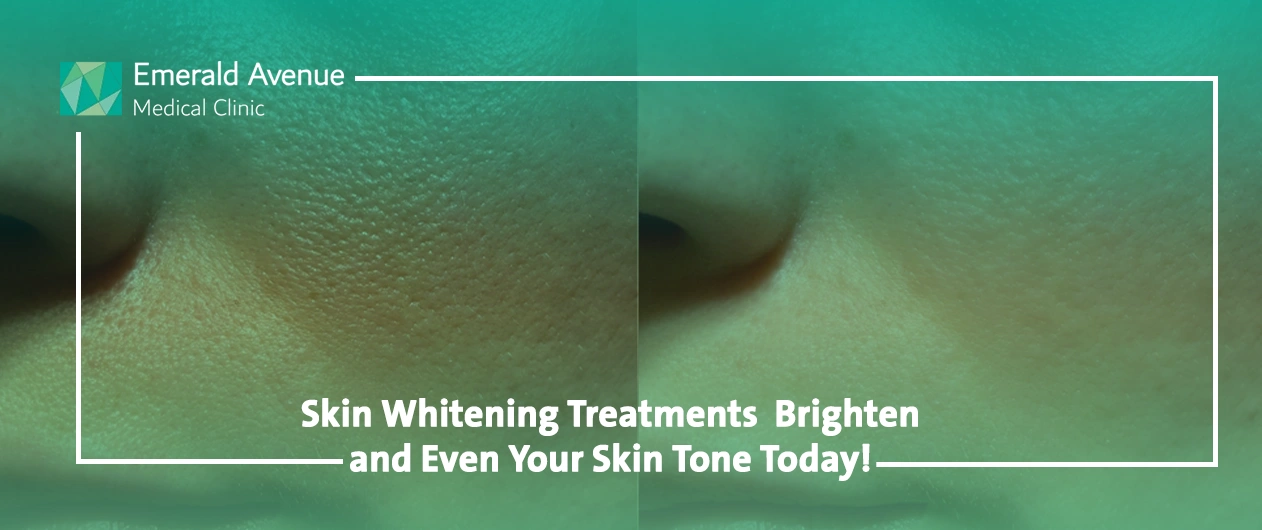
When we discuss skin whitening treatments in a clinical setting, we are rarely talking about bleaching the skin beyond its natural genetic baseline. Rather, we focus on pigmentation removal treatment, correcting dyschromia (discoloration), reversing sun damage, and inhibiting the overproduction of melanin to reveal the skin’s inherent luminosity.
Living in a high-UV index region like Dubai, hyperpigmentation is a prevalent dermatological concern. Whether stemming from hormonal fluctuations, solar exposure, or post-inflammatory scarring, uneven skin tone can age the face significantly more than wrinkles. In this article, you will know how we can achieve significant skin brightening in Dubai, restoring a clear, uniform canvas safely and effectively.
Understanding Skin Pigmentation: Causes of Dark Spots and Uneven Skin Tone
To treat pigmentation effectively, one must first understand its pathology. The color of our skin is determined by melanin, a pigment produced by specialized cells called melanocytes. Under normal conditions, melanin acts as a protective shield against UV radiation. However, when these cells become hyperactive, they deposit excess pigment, resulting in dark spots or general dullness.
Several factors trigger this overproduction:
- UV Radiation: The primary culprit. Chronic sun exposure stimulates melanogenesis (pigment creation).
- Hormonal Changes: Conditions like Melasma (often called the “mask of pregnancy”) are driven by estrogen and progesterone fluctuations.
- Inflammation: Acne, eczema, or aggressive cosmetic procedures can lead to Post-Inflammatory Hyperpigmentation (PIH).
Addressing these root causes is the first step in any fair skin treatment protocol.
Advanced Skin Whitening Treatments Available at Emerald Avenue Medical Centre
At Emerald Avenue Medical Centre, we move beyond superficial cosmetics. We employ evidence-based protocols designed to target melanin at different depths of the dermis and epidermis.
Laser Skin Whitening
Laser technology represents the gold standard for breaking down stubborn pigment. We utilize advanced systems such as Q-Switched Nd: YAG or Pico Lasers. These devices work on the principle of selective photothermolysis. They deliver ultra-short pulses of energy that shatter the melanin chromophores into microscopic particles without damaging the surrounding tissue. The body’s immune system (macrophages) then naturally clears this debris, helping to lighten dark spots effectively.
Specialized Chemical Peels for Brightening
Chemical exfoliation is a powerful tool for resurfacing. We utilize specific acids, such as Trichloroacetic Acid (TCA), Glycolic Acid, or Lactic Acid, to induce a controlled shedding of the skin’s outer layers.
This process removes the melanin-rich dead cells on the surface. For deeper pigment, we may employ peels containing tyrosinase inhibitors (like Kojic acid), which not only exfoliate but also interrupt the chemical pathway that creates pigment, acting as a potent whitening facial therapy.
Microdermabrasion for Exfoliation
For patients seeking a non-invasive option with minimal downtime, Microdermabrasion facial treatment offers excellent mechanical exfoliation. Using a diamond-tipped wand or fine crystals, we gently abrade the stratum corneum (the outermost skin layer). This removes dull, pigmented debris and enhances the penetration of subsequent brightening agents, contributing to an immediate, even complexion facial result.
Topical Brightening Serums and Creams (Glutathione & Vitamin C)
Systemic and topical maintenance is crucial. We often incorporate glutathione skin treatment protocols. Glutathione is a master antioxidant naturally found in the body. In high concentrations (administered via mesotherapy or IV drips, subject to medical suitability), it can shift melanin production from eumelanin (dark pigment) to pheomelanin (lighter pigment).
When combined with topical Vitamin C and Tranexamic Acid, it suppresses oxidative stress and brightens the overall skin tone.
How Each Treatment Works to Achieve a Brighter Complexion
The unifying mechanism behind these treatments is the regulation of Tyrosinase. Tyrosinase is the rate-limiting enzyme that controls the production of melanin.
- Inhibition: Treatments like glutathione and specific peels inhibit this enzyme, effectively telling the skin to stop producing excess dark pigment.
- Destruction: Lasers physically break apart existing pigment clusters.
- Turnover: Microdermabrasion and peels accelerate cell turnover, bringing fresh, unpigmented cells to the surface faster than the natural biological cycle.
By attacking pigmentation from these three angles, production, existence, and retention, we achieve comprehensive brightening.
Personalizing Your Skin Whitening Journey: Consultation at Emerald Avenue Medical Centre
There is no “one-size-fits-all” in dermatology. A laser setting that is safe for Fitzpatrick Skin Type I (pale) could be disastrous for Skin Type V (dark brown), potentially causing burns or worsening pigmentation.
At Emerald Avenue Medical Centre, your journey begins with a clinical analysis using digital skin imaging. We assess the depth of the pigment (epidermal vs. dermal) and your skin’s sensitivity. This allows us to curate a fair skin treatment plan that is safe for your specific genetic background.
For instance, Melasma requires a gentle, heat-free approach to avoid rebound pigmentation, whereas sunspots can often be treated more aggressively.
What to Expect During and After Treatment: Recovery and Results
Patient expectations must be managed realistically. Skin whitening treatments are rarely a “one-and-done” event.
- During the Procedure: Most laser and peel treatments involve mild tingling or snapping sensations. We prioritize comfort, using topical anesthetics where necessary.
- Immediate Aftermath: Mild erythema (redness) and slight edema (swelling) are common. With lasers, the pigmented spots may darken initially (frosting) before flaking off over 5–7 days.
- Recovery: Social downtime varies. A light peel requires zero downtime, while a deeper laser resurfacing may require 3–5 days of recovery.
- Results: Visible skin brightening in Dubai is usually noticed after the first week, once the skin heals, with optimal results appearing after a course of 3 to 6 sessions.
Maintaining Your Radiant Skin: Post-Treatment Care and Prevention
The longevity of your results depends entirely on your aftercare. The most sophisticated clinical work can be undone by a single day of unprotected sun exposure.
- Strict Sun Protection: You must apply a broad-spectrum SPF 50+ every day, even indoors. UV rays are the fuel for pigmentation.
- Gentle Skincare: Avoid harsh scrubs immediately after treatment. Use barrier-repairing moisturizers.
- Tyrosinase Inhibitors: We will prescribe home-care creams containing ingredients like Arbutin or Licorice Root to keep pigment cells dormant.
Conclusion: Unveil a More Even and Brighter Skin Tone
Achieving a luminous, uniform complexion is a science, not a miracle. It requires a deep understanding of skin physiology and the correct application of technology. Whether you wish to lighten dark spots, treat stubborn melasma, or simply rejuvenate dull skin, the skin whitening treatments at Emerald Avenue Medical Centre offer a safe, clinically proven pathway to radiance.
By trusting your skin to medical experts, you ensure that your quest for beauty never compromises your skin’s health.
Know more about: Best facial treatment for glowing skin
FAQ
Are skin whitening treatments safe?
Yes, when performed by qualified professionals. We use FDA-approved lasers and medically tested ingredients. However, using unverified “bleaching creams” from the black market can be dangerous (often containing mercury or high-dose steroids), which is why clinical supervision is essential.
How long does it take to see results from skin whitening treatments?
This depends on the modality. A whitening facial therapy or mild peel may show an immediate “glow.” However, treating deep pigmentation with lasers usually requires a course of treatment, with significant changes visible after 3–4 weeks as the skin cycles.
Are these treatments permanent?
Pigmentation removal can be long-lasting, but it is not permanently “cured” if the underlying cause (sun exposure or hormones) persists. Maintenance sessions and strict sun protection are required to prevent recurrence.
Can skin whitening treatments be done on all body parts?
Yes. While the face is the most common area, we can treat the neck, hands, and other body areas where friction or sun damage has caused darkening.
What are the potential side effects of skin whitening treatments?
Common, temporary side effects include redness, peeling, and sensitivity. Rare risks include hypo-pigmentation (white spots) or hyper-pigmentation if post-care instructions are ignored.
How does Emerald Avenue Medical Centre ensure the safety and effectiveness of its skin whitening treatments?
We adhere to the highest international medical standards (EEAT). We conduct thorough pre-treatment assessments to determine your Fitzpatrick skin type and only use technologies (like Q-Switched lasers) proven safe for your specific skin tone.