Hyperpigmentation remains one of the most prevalent concerns in aesthetic dermatology, often presenting as a complex puzzle for both the patient and the clinician. Whether it is the result of chronic UV exposure, hormonal shifts, or post-inflammatory responses, dark spots can significantly affect a person’s self-perception. In the high-UV environment of the Middle East, particularly for those seeking dark spot laser Dubai solutions, the demand for high-efficacy, low-downtime treatments has led to a paradigm shift in how we approach skin clearance.
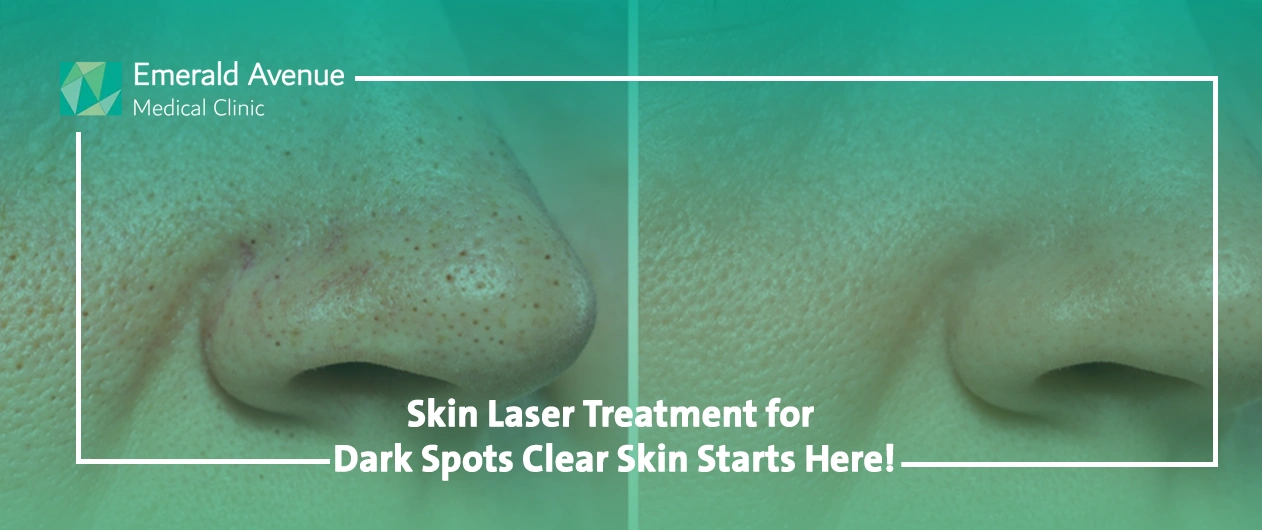
Effective Skin Laser Treatment for Dark Spots has moved beyond simple heat-based destruction to a sophisticated, light-based precision that targets pigment at a cellular level.
Understanding Dark Spots: Causes of Hyperpigmentation and Uneven Skin Tone
Before recommending a hyperpigmentation solution, we must diagnose the specific nature of the pigment. Not all dark spots are created equal. Histologically, hyperpigmentation occurs when melanocytes (the cells producing melanin) become overactive or are present in abnormally high densities.
Solar Lentigines (Sun Spots):
These are well-defined, brownish macules resulting from localized proliferation of melanocytes due to chronic UV damage.
Melasma:
A common but challenging condition often triggered by hormonal fluctuations (estrogen/progesterone) and heat. It typically presents as symmetrical, bridge-like patches on the cheeks, forehead, and upper lip.
Post-Inflammatory Hyperpigmentation (PIH):
This occurs following an injury or inflammatory skin condition (like acne). In Dubai’s diverse population, PIH is particularly common in patients with higher Fitzpatrick skin types (IV-VI).
Ephelides (Freckles):
Often genetic, these darken with sun exposure and are usually more superficial.
In our clinical practice, distinguishing between these is vital because melasma laser treatment requires a vastly different energy setting compared to simple sun spot removal.
How Laser Treatment Works to Target and Eliminate Dark Spots
The cornerstone of pigmentation laser removal is the principle of selective photothermolysis. This concept, pioneered by Anderson and Parrish, dictates that specific wavelengths of light can target a “chromophore” (in this case, melanin) without damaging the surrounding healthy tissue.
When the laser energy hits the pigment, the melanin absorbs the light, converting it into heat or mechanical energy. This energy shatters the pigment into microscopic particles. Once fragmented, the body’s immune system, specifically macrophages, recognizes these particles as waste and naturally clears them through the lymphatic system over the following weeks. This process creates the “clear skin laser therapy” effect that patients desire.
Skin Laser Treatment for Dark Spots at Emerald Avenue Medical Centre
At Emerald Avenue Medical Centre, we utilize a multi-modal approach. We don’t believe in a “one-size-fits-all” laser; instead, we select the technology based on the pigment’s depth and the patient’s skin type.
Pico Laser Technology for Pigmentation
The Pico laser is currently the gold standard in the industry. Unlike traditional lasers that use nanosecond pulses (one-billionth of a second), Pico lasers operate in picoseconds (one-trillionth of a second).
- The Advantage: It creates a “photo-acoustic” effect rather than a purely thermal one. It shatters pigment into a fine “dust” rather than “pebbles,” making it easier for the body to eliminate. It is exceptionally safe for darker skin tones, significantly reducing the risk of rebound hyperpigmentation.
Q-switched Laser for Deeper Spots
For targeted, stubborn dermal pigment, the Q-switched Nd:YAG laser remains a powerhouse. It is highly effective for skin discoloration laser therapy, particularly for deep-seated lentigines and certain types of birthmarks. By delivering high-intensity pulses in very short bursts, it targets the deeper layers of the dermis where topical creams cannot reach.
The Laser Treatment Process: What to Expect During Your Session
A typical session for dark spot laser Dubai starts with a thorough cleansing and a photographic skin analysis.
- Preparation: In some cases, a topical numbing cream is applied, though many patients find the “snapping” sensation of the Pico laser quite tolerable without it.
- The Procedure: The handpiece is moved across the treatment area. You may see an immediate “frosting” or whitening of the spots; this is a positive clinical sign indicating the gas bubbles are forming as the pigment shatters.
- Duration: Most sessions for facial hyperpigmentation take between 15 and 30 minutes.
While our primary focus is pigment, we often integrate this with the best facial treatment for blackheads (such as a Carbon Peel or HydraFacial) to ensure the skin’s texture is as refined as its tone. Combining medical-grade extractions with laser therapy provides a comprehensive “clear skin” result.
Number of Sessions Required for Dark Spot Removal
Pigmentation is rarely a one-and-done fix.
- Sun spots: Typically 1–3 sessions.
- Melasma: Requires a maintenance-based approach, often 4–6 sessions with low-energy “toning” settings to avoid triggering more pigment.
- PIH: Usually 3–5 sessions, spaced 4 weeks apart.
Is Laser Treatment for Dark Spots Right for You? Expert Consultation in Dubai
In a city with 300+ days of sunshine, candidacy for laser is strictly vetted. Patients must be committed to sun protection. We generally advise against aggressive laser treatments if the patient has had significant sun exposure in the two weeks prior to the session.
During a consultation at Emerald Avenue Medical Centre, we evaluate your Fitzpatrick skin type. Those with darker skin (Type IV and above) require “long-pulse” or “Pico” settings to avoid the risk of burning. We also screen for contraindications such as active skin infections, use of photosensitizing medications (like Roaccutane), or a history of keloid scarring.
Aftercare for Optimal Results and Preventing Recurrence
The laser does the heavy lifting, but the patient’s aftercare determines the longevity of the results.
- Strict Photoprotection: A broad-spectrum SPF 50+ is mandatory. I recommend physical blockers (Zinc Oxide or Titanium Dioxide) for melasma patients, as they reflect heat as well as light.
- Cooling: Use gentle, hydrating serums (Hyaluronic Acid or Centella Asiatica) to soothe the skin post-treatment.
- Avoid Irritants: Stop using Retinols, AHAs, or BHAs for at least 5–7 days post-procedure.
- Pigment Suppressors: We often prescribe “tyrosinase inhibitors” (like Tranexamic acid or Kojic acid) to keep the melanocytes “quiet” while the skin heals.
FAQ
Is laser treatment for dark spots painful?
Most patients describe the sensation as a light rubber band snap. Modern systems include integrated cooling (Cryogen) that numbs the skin simultaneously, making the procedure very comfortable.
What is the typical downtime after laser treatment for dark spots?
For Pico and Q-switched lasers, downtime is minimal. You may experience redness for 24–48 hours. Dark spots may temporarily darken (the “coffee ground” effect) before flaking off naturally within 5–7 days.
Can laser treatment remove all types of dark spots?
Laser is highly effective for most epidermal and dermal pigments. However, certain conditions like “Hori’s Nevus” or very deep melasma may require a more prolonged, combination treatment plan.
Are there any side effects of laser dark spot removal?
If performed by an untrained technician, there is a risk of burns or “confetti-like” hypopigmentation (white spots). This is why choosing a medically supervised clinic is essential.
How long do the results of laser dark spot treatment last?
The laser removes existing pigment. However, new spots can form with new sun damage or hormonal changes. Maintenance and SPF are the keys to permanent-looking results.
What safety measures does Emerald Avenue Medical Centre implement for laser treatments?
We use FDA-approved medical-grade lasers, conduct mandatory patch tests for sensitive skin types, and provide customized energy protocols based on real-time skin response.